ServicesEquipment Installation
Loading Dock Equipment Installation in Shamokin
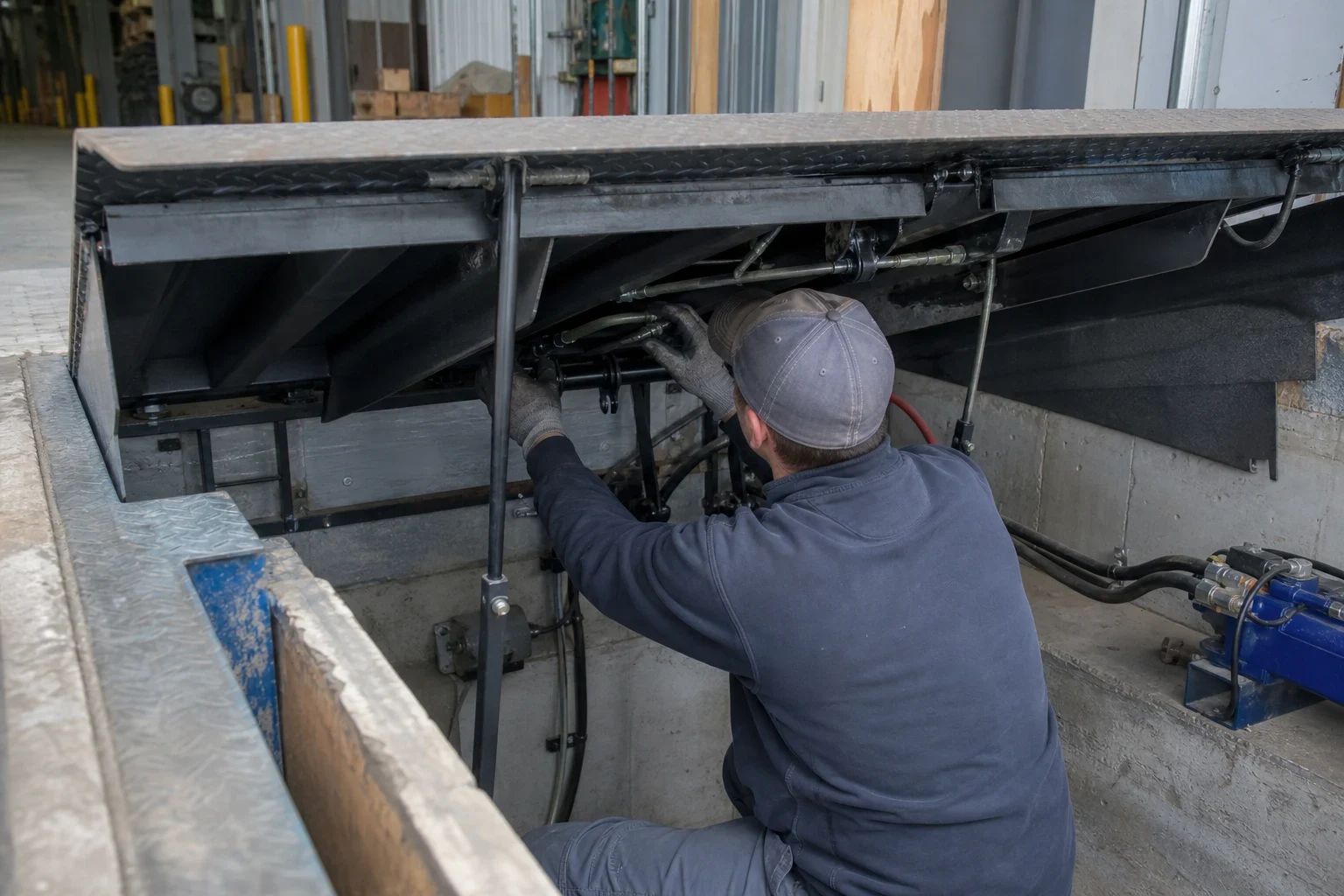
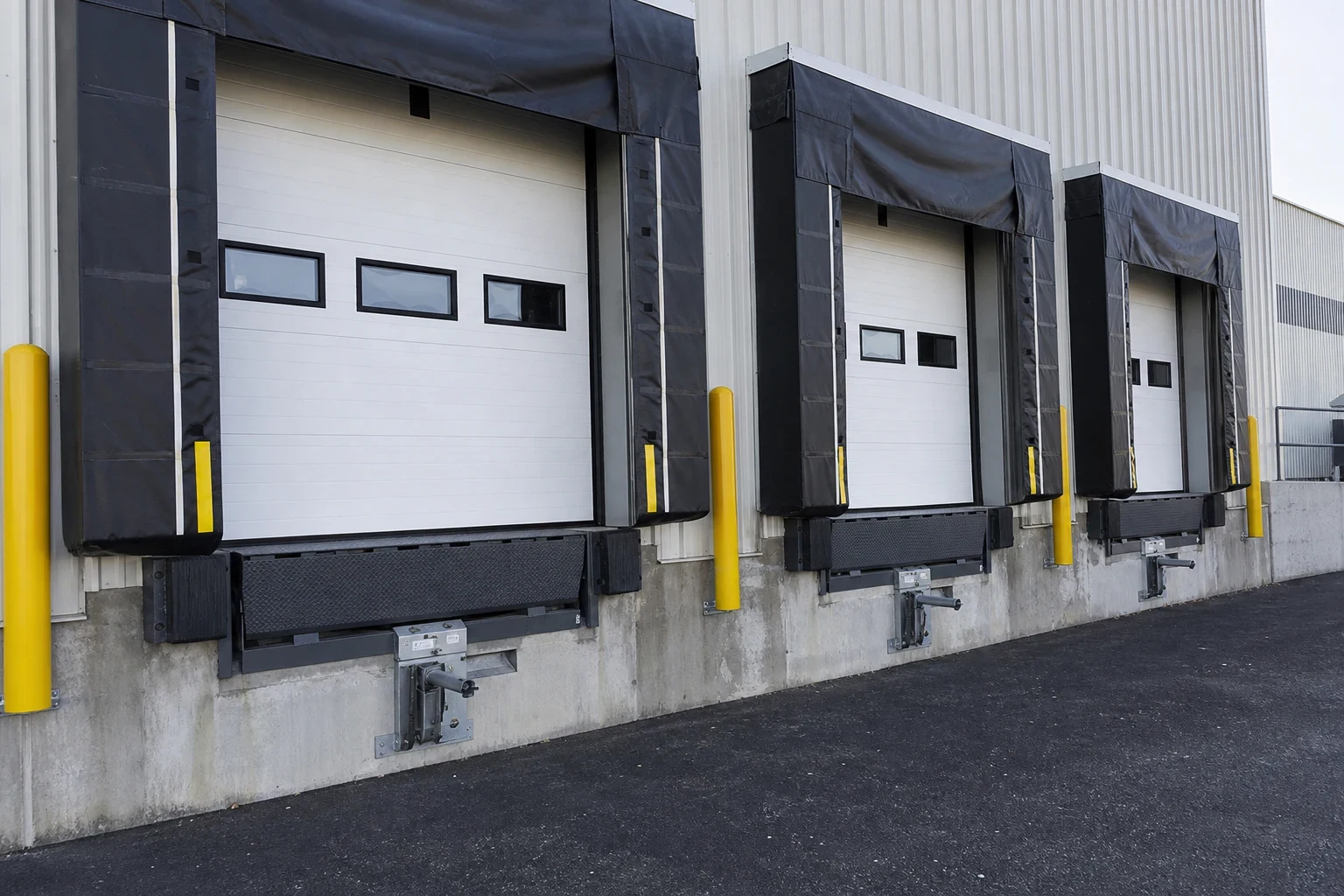
We install dock levelers, vehicle restraints, seals, bumpers and overhead doors so each position works as a system. We plan the work around your shipping schedule, and if damage started the project, we document the old equipment before it comes out.
New equipment that fits your dock and your trucks
Installation is the right call when repairs stop making sense. That might be a leveler with a cracked deck plate, a restraint whose parts are no longer made, or a dock that was built for trailers your carriers stopped using years ago. New equipment only pays off if it is set correctly into the pit, anchored to sound concrete and wired so the pieces talk to each other.
Our technicians are factory-trained and certified on the equipment from the manufacturers we represent. That matters on install day, because the details that decide how long a leveler or restraint lasts are in the setup: shim points, weld lengths, hydraulic bleed and control settings.
Many of the projects we see start with damage. A trailer pulls away early, a lift truck drops off an edge, or a door takes a hit. When that happens, we photograph what failed and write up why, so you have clear records for your insurer. We explain how that paperwork usually gets used, but the adjuster makes the coverage decision, not us.
What an installation covers
- Pit inspection and prep
- We check the pit walls, curb angle and floor for cracks, spalling and settled concrete before anything new goes in. If the pit needs repair, you hear about it up front with photos, not halfway through the job.
- Leveler setting and anchoring
- Dock levelers are set level to the floor, shimmed and welded or anchored to the curb angle. We confirm lip extension and working range against the trailer heights you actually receive.
- Vehicle restraints and bumpers
- Restraints are mounted to the dock face at the height that catches the rear impact guard on your typical trailers. New bumpers protect the building and the restraint from repeated contact.
- Seals, shelters and doors
- We fit dock seals or shelters to the opening and your trailer mix, and install or replace the overhead door so it closes cleanly against the leveler. Central Pennsylvania winters make a good seal a real heating cost question.
- Controls, wiring and interlocks
- Push-button stations, light communication and interlocks between the door, restraint and leveler are wired and labeled. That way the dock operates in a safe order every time.
- Testing and a walkthrough
- Every unit is cycled under load before we leave. We show your crew how the controls work and what to watch for.
Signs it is time for new equipment
Repairs keep coming back
If the same leveler or restraint is down every few months, the repair bills and downtime can outrun the cost of a new unit. We will tell you honestly which one you are facing.
Parts are discontinued
Older equipment can sit idle for weeks waiting on a part that is no longer stocked. Replacement ends that waiting game.
Damage from a truck or lift strike
A bent deck, torn hinge or crushed restraint is often not safe to straighten. We document the damage before removal so your claim file has what it needs.
Your trailers have changed
Air-ride suspensions, lower decks and refrigerated units can leave an old leveler working at steep grades or short on lip. New equipment matched to today's fleet is safer for drivers and lift operators.
No restraint at the door
Docks without a vehicle restraint rely on wheel chocks and a driver's attention. Adding one is one of the most direct safety upgrades a dock can get.
How an installation runs
- 1
Site walk and measurements
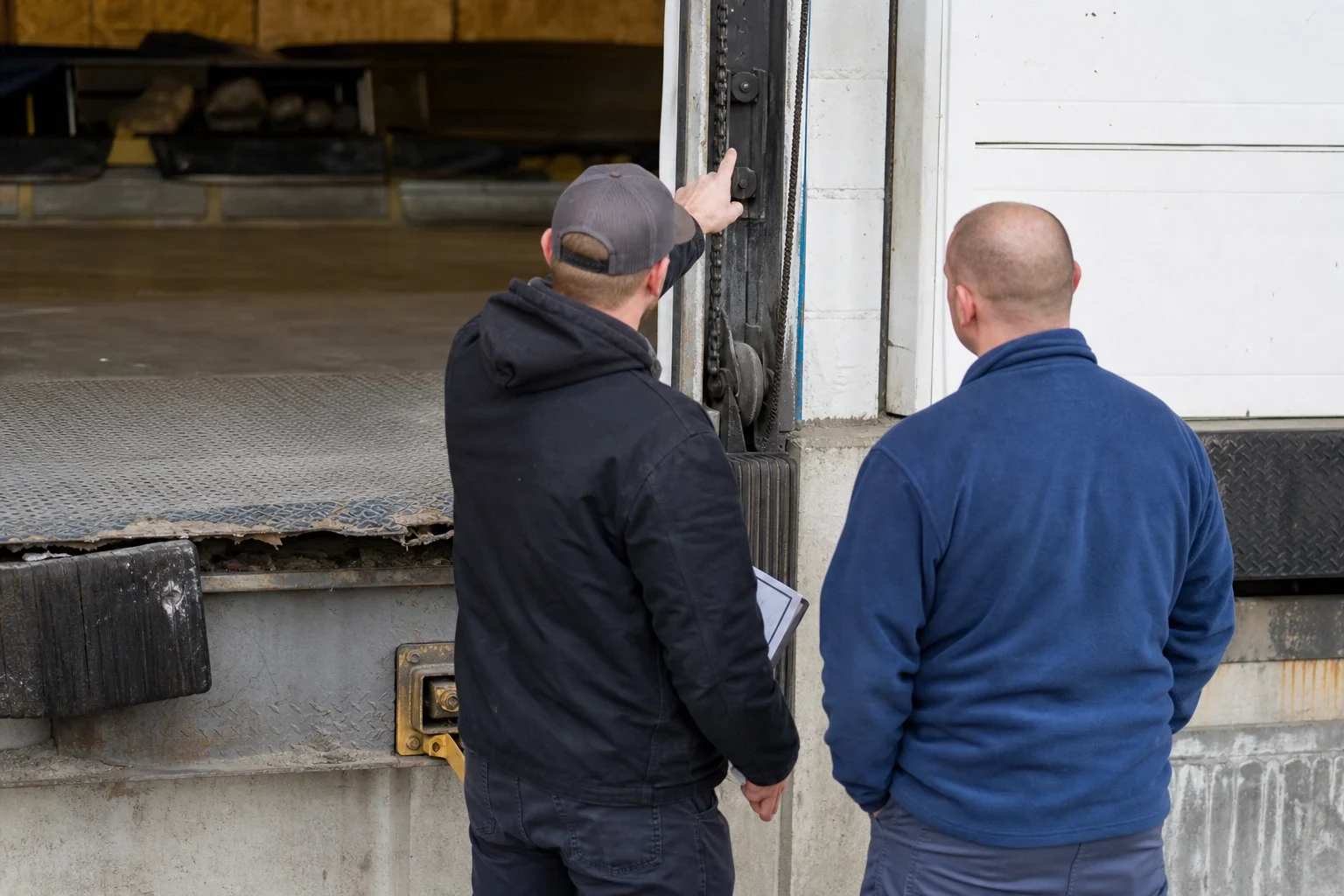
We look at each dock position, measure the pit and opening, and ask about your trailer mix and busiest shipping days. If damage is involved, this is when we take the first round of photos.
- 2
Written estimate and schedule
You get a line-item estimate covering equipment, labor, concrete work and electrical. We schedule door by door so the rest of your dock keeps moving.
- 3
Removal and documentation
We remove the old equipment, record its condition and note anything found underneath, such as a failed pit floor. Those notes and photos are yours to keep.
- 4
Installation and wiring
New equipment is set, anchored, welded and connected to controls. We keep the work area taped off and clear for your crew.
- 5
Testing, training and cleanup
We cycle every unit, walk your team through it and haul away the old steel and debris. The dock is handed back ready to receive.
What shapes the cost of an installation
Every dock is different, so we price after we have seen yours. The estimate lists each item separately, which also helps when an insurer wants to see what was replaced and why. These are the things that move the number most.
- Equipment type and capacity
- Hydraulic levelers cost more than mechanical ones, and higher weight ratings add steel. Restraint style and door type matter too.
- Condition of the pit
- Sound concrete keeps the job simple. Cracked curbs or a settled pit floor need repair before new equipment can be anchored properly.
- Electrical work
- Hydraulic units, powered restraints and interlocks need power and control wiring. If a circuit has to be run to the dock, that adds time.
- Number of positions and phasing
- Several doors done together are more efficient per door. Spreading work around a tight shipping schedule can add mobilization days.
Installation questions we hear
Something not covered here? (570) 683-1330
How long will a dock door be out of service?
A straightforward leveler swap in a sound pit usually takes a day or so at that door. Pit repairs or new wiring can add time, and we tell you that before we start. We work one position at a time so the rest of your dock stays open.
Can you help with the insurance side after a trailer damages our equipment?
We can photograph the damage, describe what failed and give you a line-item estimate for replacement. Those records are what most adjusters ask for. We do not act as your adjuster or promise what a policy will cover, but we will explain the usual steps.
Should we replace the whole dock position or just the leveler?
It depends on the age and condition of the restraint, seals and door. Sometimes only the leveler is the problem. If other pieces are close to the end of their life, we will show you and let you decide.
Do you install equipment you sell, or can you install units we bought elsewhere?
Most installs use equipment from our Loading Dock Equipment Sales lineup, which our technicians are trained on. If you already own a unit, call us with the make and model and we will tell you plainly whether it is a good fit for us to install.
What should we do after the install to keep it running?
Regular service catches worn seals, low hydraulic fluid and loose anchors early. Our Loading Dock Preventative Maintenance visits are built for that, and the walkthrough at the end of every install covers the daily checks your crew can do.
Ready to replace worn or damaged dock equipment
Tell us what is happening at your dock and which trucks you receive. We serve facilities in Shamokin, Sunbury, Mount Carmel and the surrounding area, and we will set up a site walk to measure and document what you have.