ServicesPreventative Maintenance
Preventative Maintenance for Loading Docks in Shamokin
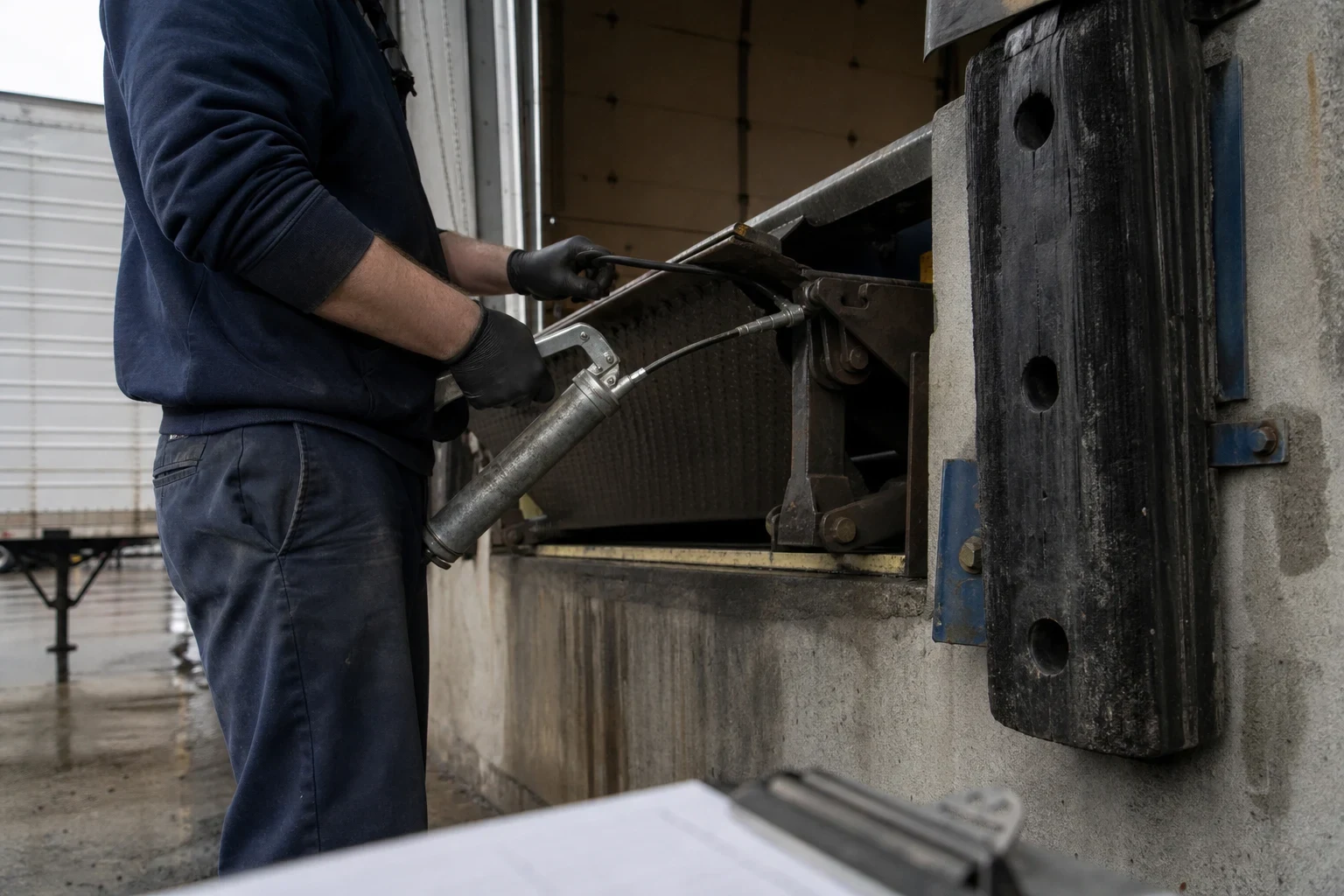
On a schedule built around your shifts, we inspect, grease and adjust your dock levelers, overhead doors and vehicle restraints. A written report with photos follows each visit, showing what's wearing, what can wait and what to repair before it takes a door out of service.
Small fixes now, fewer stopped trucks later
Most dock failures give warning first. A hydraulic leveler starts to drift, a door cable frays at the drum, or a restraint hook stops engaging fully. Preventative maintenance means a trained technician finds those signs while they are still cheap adjustments instead of a dead door with a trailer waiting.
We work around your receiving schedule, one door at a time, so the rest of your loading dock keeps moving. Our technicians are factory-trained and certified on the equipment from the manufacturers we represent, which matters when a leveler or restraint needs settings checked against the maker's specs.
Every visit ends with a record: what we checked, what we adjusted, and photos of anything worn or damaged. If a truck ever hits a door or a leveler gets damaged, that history helps you show your insurer what condition the equipment was in before. We can't promise how a claim turns out, but good records make the conversation much easier.
What a maintenance visit covers
Dock leveler inspection
We check hydraulic fluid and hoses, lip hinges, hold-down mechanisms, springs and toe guards. We look for cracked welds and run the leveler through full cycles to confirm it rises, extends and stores the way it should.
Overhead door service
Springs, cables, rollers, tracks and hinges get inspected and lubricated. We balance the door, test the safety reversal and photo eyes, and note any panels with impact damage.
Vehicle restraint testing
We test hook engagement, the light communication system and any interlocks tied to your leveler or door. A restraint that only engages part of the way is a safety problem, so we write it up clearly.
Seals, shelters and bumpers
Torn dock seals let in cold air and water, and worn bumpers let trailers strike the wall. We measure bumper wear and flag what is close to replacement.
Written report with photos
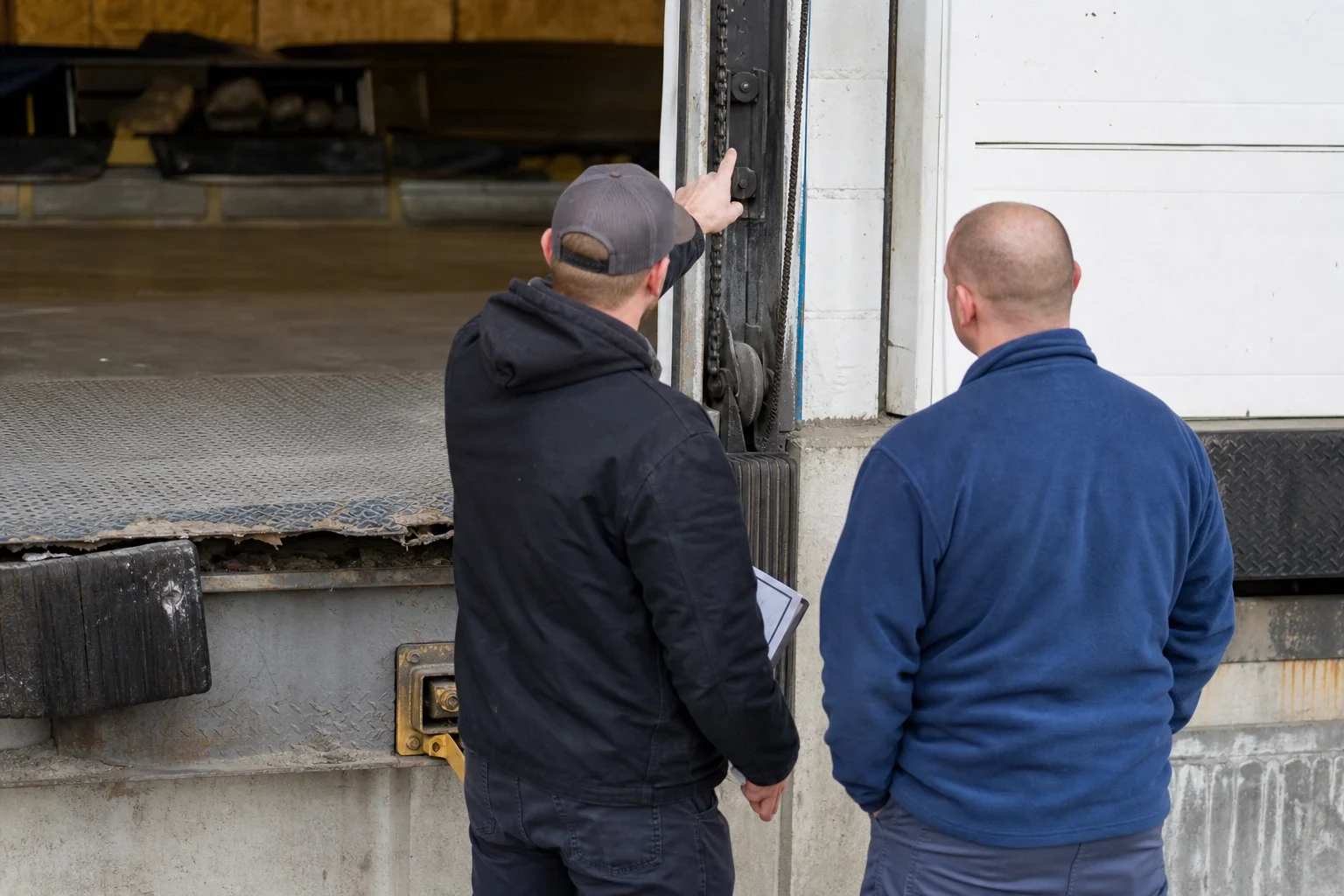
You get a door-by-door summary that separates urgent repairs from items to watch. It's yours to keep for safety files, budget planning or an insurance conversation.
Signs your dock is overdue for maintenance
- The leveler drifts or bounces
- A leveler that sinks under a forklift or springs up unevenly usually points to hydraulic or spring trouble. Left alone, it can drop while a load is on it.
- Doors are loud or slow
- Grinding, banging or jerky travel means rollers, bearings or spring tension need attention. These parts get worse fast with heavy cycle counts.
- Restraint lights don't match
- If the inside and outside lights disagree, drivers and dock workers can't trust them. That is the moment people start pulling away from docks too early.
- Winter drafts at closed doors
- Cold air around a closed door means worn seals or weatherstripping. In central Pennsylvania winters, that costs you heating and makes the dock floor slick.
- No record of the last service
- If nobody can say when the equipment was last checked, it's time. A baseline inspection gives you a starting point.
How a maintenance visit runs
- 1
Plan it by phone
Tell us how many doors you have, what equipment is on them, and when your dock is quietest. We'll set a time and a visit frequency that makes sense for your traffic.
- 2
Check in and lock out
Our technician meets your contact on site and takes one door out of service at a time. Equipment is locked out before anyone works on it.
- 3
Inspect, adjust and lubricate
We work through each leveler, door and restraint, making routine adjustments as we go. Anything beyond a quick fix is noted and photographed, not done without your approval.
- 4
Walk-through and report
Before we leave, we walk you through what we found. The written report with photos follows, with repairs listed by priority so you can plan.
What affects the cost of preventative maintenance
Pricing depends on how much equipment you have and what shape it's in. We explain the scope on the phone and put it in writing before any work starts. Repairs found during a visit are quoted separately so nothing gets added without your say.
- Number of dock positions
- A two-door grocery receiving area takes far less time than a distribution center with a long row of docks.
- Equipment type and age
- Hydraulic levelers, mechanical levelers, high speed doors and restraints each have different check points. Older equipment usually needs more adjustment.
- Visit frequency
- Facilities running multiple shifts often need more frequent visits than a site that receives a few trucks a week.
- Parts found worn
- Springs, cables, seals and bumpers are replaced only when you approve them, and they're priced on their own.
Preventative maintenance questions
- How often should our loading dock be serviced?
- It depends on traffic. Busy warehouses and distribution centers running several shifts often benefit from quarterly visits, while lighter-use docks may be fine with twice a year. We'll suggest a schedule after seeing your equipment and hearing how hard it works.
- Do you have to shut down our whole dock?
- No. We take one position out of service at a time and coordinate with your receiving staff. Most of your doors stay open for trucks while we work.
- Can your reports help with an insurance claim?
- They can help. A dated record with photos shows what condition the equipment was in before an incident, which is useful when a trailer strikes a door or leveler. We don't act as your adjuster or predict what your insurer will pay, but we'll explain what we documented and photograph new damage when you need it.
- Will you fix things on the spot?
- Routine adjustments, lubrication and minor tightening happen during the visit. Larger repairs, like replacing a spring or a hydraulic cylinder, are written up and quoted first so you decide.
- Do you service equipment you didn't install?
- Yes. We maintain levelers, doors and restraints already in place at your facility. If something turns out to be beyond repair, we can talk through options on our dock levelers or overhead doors pages.
Get ahead of your next breakdown
Tell us about your docks and your busiest hours. We'll set up a visit and send you a clear report afterward.