ServicesVehicle Restraints
Vehicle Restraint Repair and Installation in Shamokin, PA
When a trailer can creep away from the dock, every forklift trip across that plate is a risk. We repair, adjust and install vehicle restraints so trailers stay put. If a truck caused the damage, we document what we find so your insurance conversation starts with facts.
Keeping Trailers Locked to the Dock
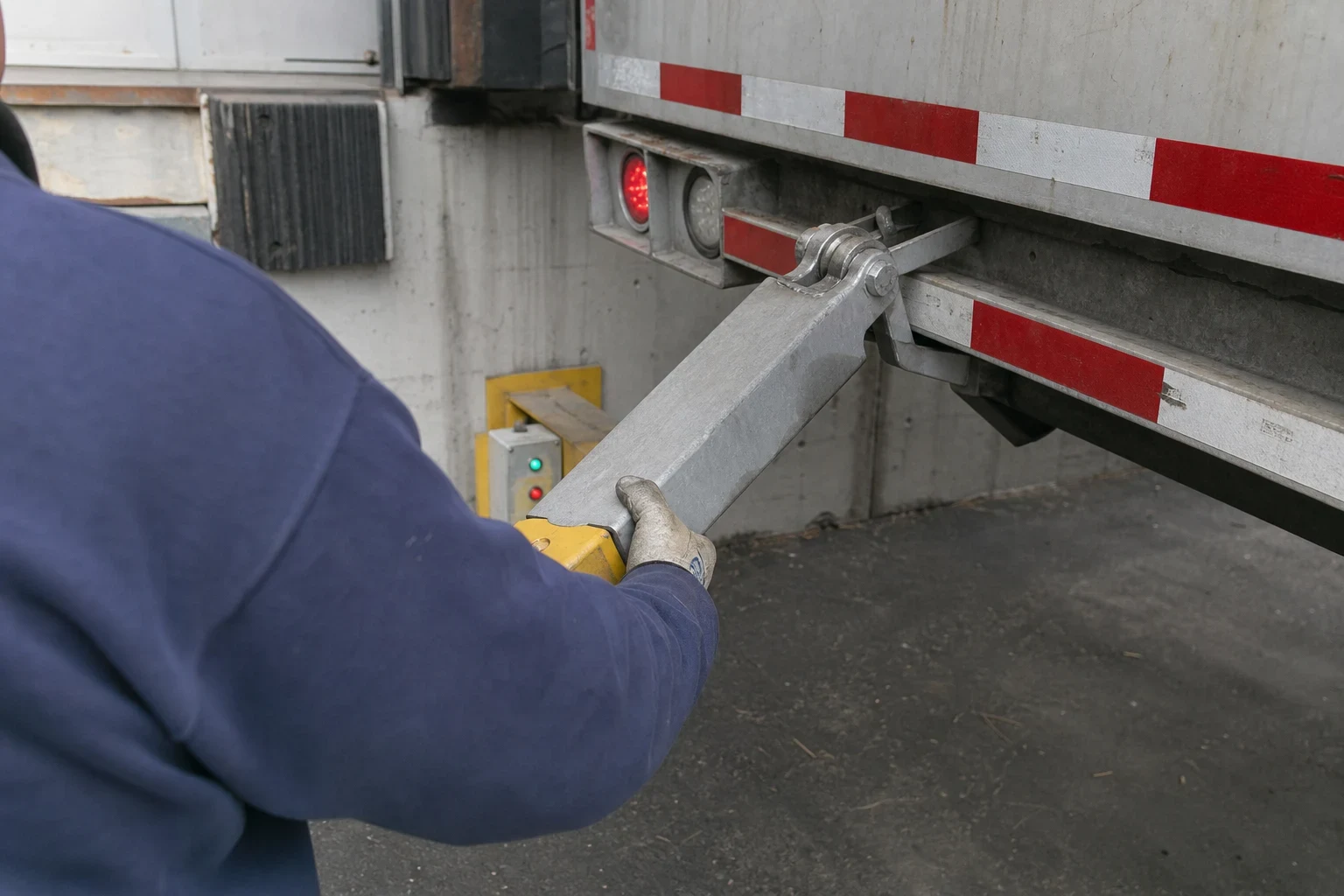
A vehicle restraint holds a trailer against the dock while your crew loads or unloads. Most grab the trailer's rear impact guard with a rotating hook. Others block a rear wheel. Either way, the restraint is the only thing that stops early departures, trailer creep and landing-gear collapse from pulling a forklift off the edge.
Our technicians are factory-trained and certified on the equipment of the manufacturers we represent, so we know how each restraint is meant to engage, signal and interlock. We fix what is broken, tell you plainly whether a repair or a replacement makes more sense, and leave the dock working the way your operators expect.
Many restraint failures start with a trailer that backed in too hard. When that happens, we photograph the damage, note the parts involved and explain how a carrier or insurance claim usually moves. We do not act as your adjuster, but you will have clear records to hand over.
What Our Restraint Work Includes
- 01
Hook and carriage fixes
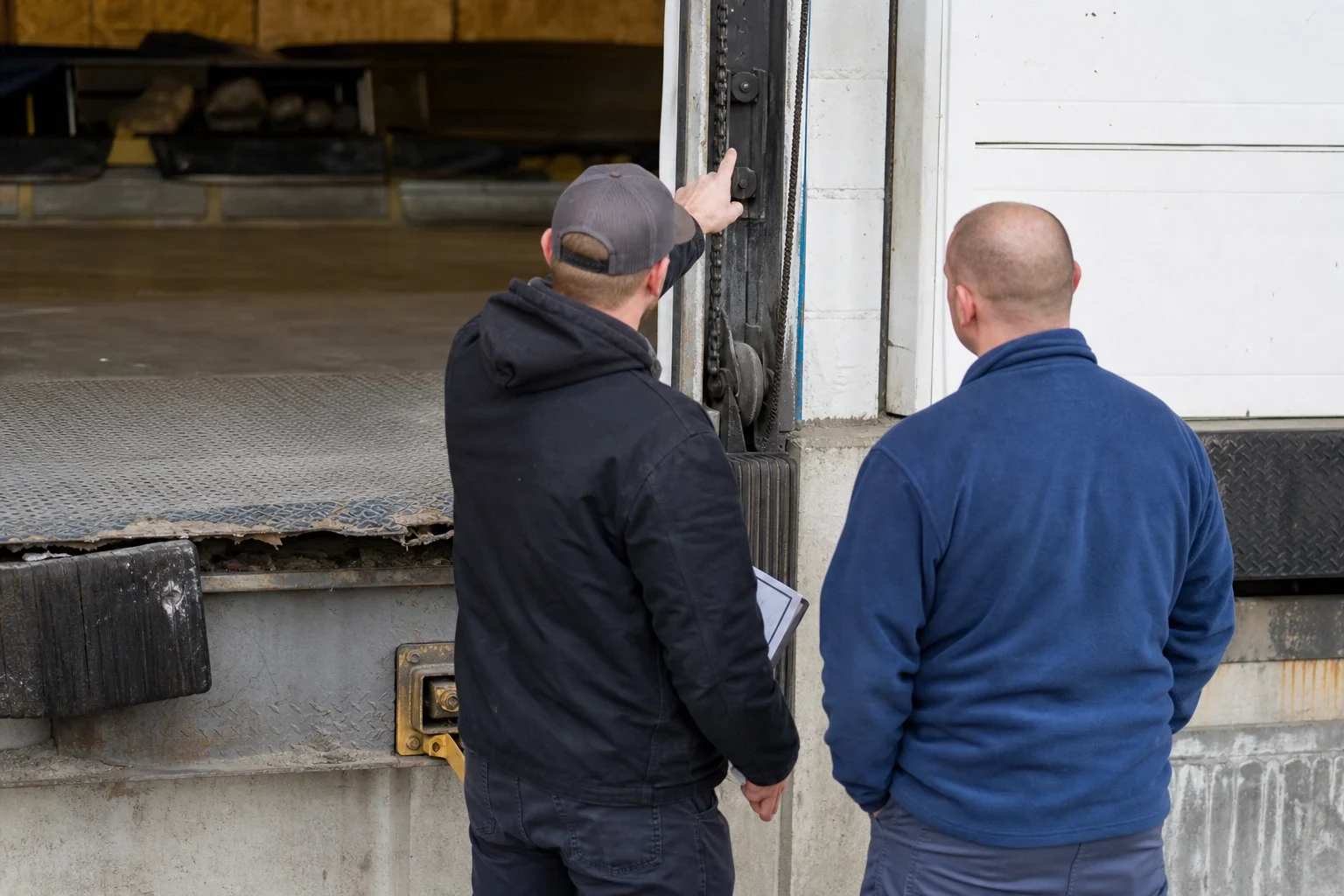
Bent hooks, worn carriages and weak springs get straightened or replaced, so the restraint travels up and grabs impact guards set at different heights.
- 02
Hydraulic and motor repair
Leaking seals and worn motors sap a powered restraint's strength. We track down the leak, swap out the failed parts and check holding force before we call it done.
- 03
Signal lights and controls
Inside and outside red and green lights let drivers and forklift operators know when it's safe to move. We fix dead lamps, sensors and control panels so the signals reflect what the hook is really doing.
- 04
Leveler and door interlocks
When the restraint is linked to a dock leveler or overhead door, we confirm the sequence runs as intended, so the leveler can't deploy before the trailer is locked in.
- 05
Installing new restraints
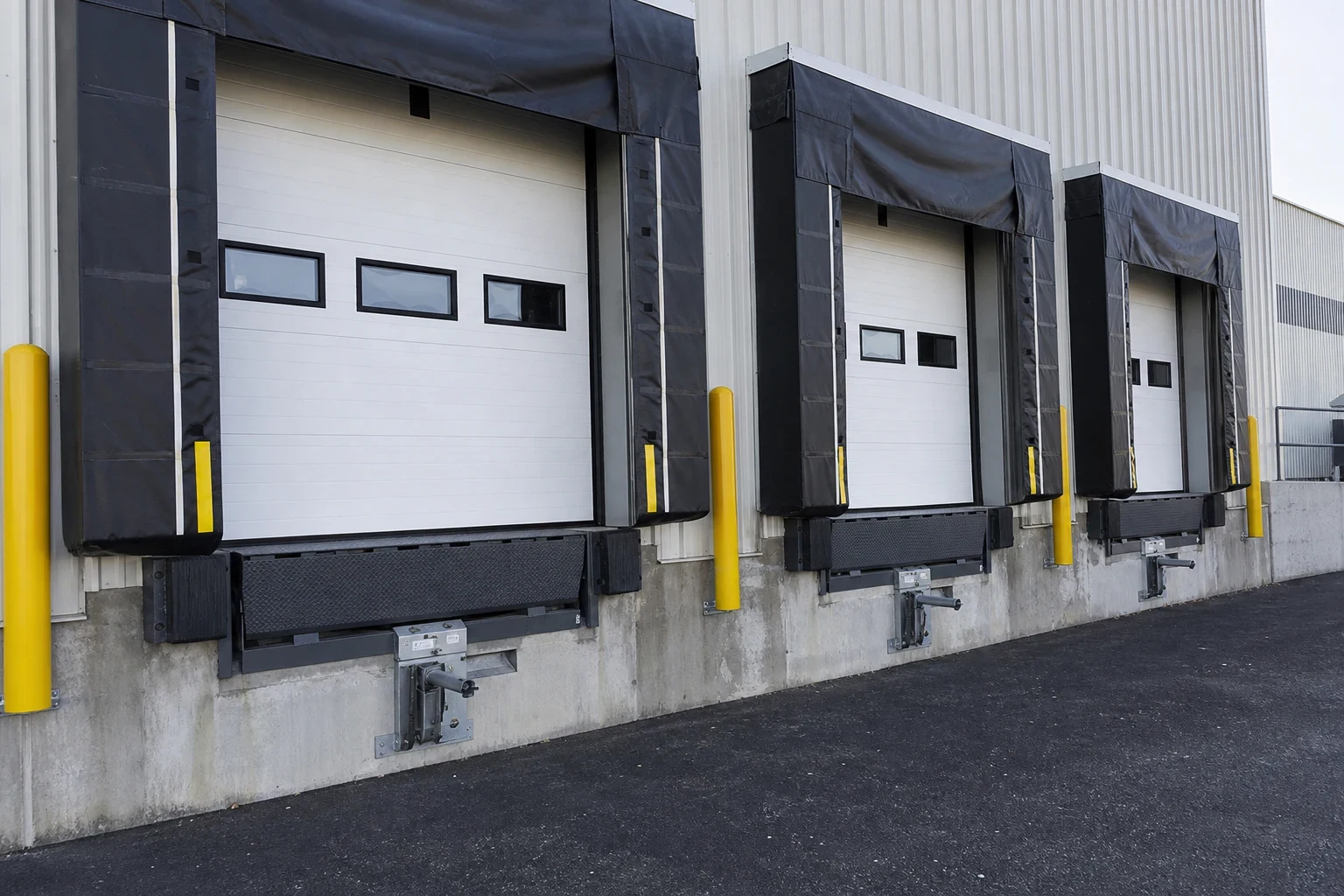
For docks that depend only on wheel chocks, we can mount a restraint to the existing pit or wall and connect it to your controls.
- 06
Damage records
Photos, a written account of what failed and an itemized estimate, ready to give your carrier, landlord or insurer.
Questions about Vehicle Restraints?
Call(570) 683-1330Signs Your Vehicle Restraint Needs Attention
The hook misses or slips
If the hook rides over the impact guard or lets go when the trailer shifts, the restraint is not holding. Stop using that door until it is checked.
Lights stay red or flash wrong
A green light outside while the hook is down, or a stuck red light inside, means operators cannot trust the signal.
Visible bending after an impact
A trailer backing in fast can twist the carriage or crack welds. Even if the unit still moves, get it inspected and photographed before the next truck arrives.
Slow, noisy or jerky travel
Grinding, chattering or a hook that hesitates usually points to worn rollers, low hydraulic fluid or a weak motor.
Winter sticking
Ice, packed snow and road salt collect in the track during Pennsylvania winters and can freeze a hook in place or corrode moving parts.
How a Restraint Service Visit Goes
- 1
We talk it through by phone
Tell us which door, what the restraint is doing and whether a truck hit it. We set a time that keeps your dock schedule moving.
- 2
Inspection and photos
On site, we check the hook, carriage, hydraulics, wiring, lights and any interlocks. We photograph damage before touching anything, which matters if a claim follows.
- 3
Honest repair or replace answer
You get a written estimate with each part and the labor listed. If repair makes sense, we say so. If the unit is worn past saving, we explain why.
- 4
Repair and testing
We complete the work, cycle the restraint against a trailer or test fixture, confirm the signals and interlocks, and clean up the dock area before we leave.
What Affects the Cost of Restraint Work
We price every job from what we actually find at your dock, and we put it in writing before work begins. A simple adjustment and a restraint torn loose by a trailer are very different jobs, and the estimate will show exactly why.
- Type of restraint
- Manual hooks, powered hook restraints and wheel-based units use different parts and take different amounts of time.
- Extent of impact damage
- A bent hook is one thing. A cracked mounting plate or damaged dock face adds steel work and labor.
- Controls and interlocks
- Replacing a control panel, sensors or wiring tied to a leveler and door takes longer than mechanical repair alone.
- Parts availability
- Current models are usually easy to source. Older or discontinued restraints may need substitute parts or point toward replacement.
Vehicle Restraint Questions
A truck damaged our restraint. Will insurance pay for it?
That depends on your policy and on the carrier whose driver caused it, so we cannot promise coverage. What we can do is photograph the damage, describe what failed and give you a line-item estimate. Most claims move faster when that paperwork is ready on day one.
Should we repair our restraint or replace it?
If the carriage and mounting are sound and parts are available, repair is often the sensible choice. When the frame is bent, welds are cracked or the model is no longer supported, replacement usually costs less over time. We show you what we found and let you decide.
Can you add a vehicle restraint to a dock that only uses wheel chocks?
Yes, in most cases. We look at the dock face, the bumpers and the trailers you receive, then recommend a hook or wheel-based restraint that fits. We can also tie it into your dock leveler and overhead door controls.
Do you work on restraints from different manufacturers?
The brands we represent are the ones our training covers, and those are the restraints we know inside and out. For other makes, ask us when you call. We will tell you honestly whether we can service that unit or whether another option makes more sense.
How often should restraints be checked?
High-traffic docks benefit from regular checks as part of loading dock preventative maintenance, along with a look after any hard trailer impact. Catching a worn spring or failing light early keeps the door in service.
Get Your Trailer Restraint Working Again
Tell us what the restraint is doing and whether a trailer was involved. We will set up a visit around your shipping schedule and walk you through the damage records if you need them.